Showing posts with label pop religiousity. Show all posts

17 January 2026

An Pinakadakula sa Kahadean


Giya sa Prayer-Meeting nin mga Saradít na Komunidad nin Pagtubód (SAKOP) para sa semana kan Enero 18-24, 2026. Basahon an Evangelio gikan sa Mateo 18,1-5,10 (Solemnidad kan Santo Niño - A).

“Siísay an pinakadakulà sa Kahadean kan langit?” Iní an hapót sa satóng Kagurangnan Jesu Cristo kan mga disipulos. Pinatindog Niyá sa tahaw ninda an saróng akì. “An siísay man magpapa-kumbabâ siring sa sadít na aking iní, iyán an pinakadakulà sa Kahadean kan langit.”

An pinakadakulà sa kahadean iyó an hadè.

An hadè nin langit duminatóng sa dagâ, halè sa kamurawayan nin pagkadiós nagpakumbabâ, nagín tawong dukhâ, nagín aking sadít. Iní an sinecelebrár ta sa fiesta kan Santo Niño. Igwa nin profesía sa Isaías 9,5: “Ta omboy namundag satô, aking lalaki itinao satô; an pagpamayó nasa Saiyang abaga; asín aapodón Siyá: Makangangalas na Parahatol, Diós-Mapangyari, Amâ-sagkod-pa-man, Principe nin Katoninongan.”

An fiesta kan Santo Niño nagpapagiromdom man kan kapinônan kan pagtubód na Cristiano sa Pilipinas. An imahen kan Santo Niño de Cebú iyó an orihinál na imahen na pigregalo ni Fernando Magallanes ki Hara Amihan, agóm ni Raja Humabon kan Cebú, kan sinda asín saindang mga nasasakopan nagpabonyág na mga Cristiano kan taón 1521.

An Diós kaiba niatò asín nagín siring sa satô.

An satóng Kagurangnan nag-agi man syempre sa pagkaakì siring sa satô gabós. Kayâ nganì maski an standard na imahen iyó si Jesús na nakabadò bilang aking hadè, may manlaen-laen pang porma an Santo Niño: may nakabadò páng-akì, may naka-unipormeng pulís o bumbero, may nakapam-basketball, asín ibá pa. Iní an misterio kan pakanitawo o incarnación sa populár na imahinasyón!

Alagad igwa man nin mga piggigibong pampaswerte saná an imahen, pigdidisplay pa kaiba an nag-uulok na Buddha, an talapáng na may ugom na sinsilyo, asín an ikós na nagpapaypay an kamót. Iní saláng gawè nin huli ta ginigibo si Cristo na garó sanáng diós-diósan o anito.

Kan si Magallanes magadán sa Mactan, nakabalík an mga Kastilà kan taón 1565 na, sa pamámayó ni Miguél Lopez de Legazpi. Nagkaigwá nin ralaban asín dinaóg ninda an pwersa ni Raja Tupas, na iyó na kaidto an hadè kan Cebú. Nákua kan mga Kastilang soldados an imahe ni Santo Niño sa saróng nasulóng payag-payag kaiba an ibá pang mga imahe nin mga anito asín diós-diósan. Nagpatugdok sinda nin kapilya dumán asín nagpoón paglakóp an devoción ki Santo Niño kaiba kan paglakóp kan Cristianong pagtubód.

An Diós nag-aagda satô na magtalubò sa pagtubód sa Saiya.

Kaipohan ta man na pakarhayón an nagkapirang aspeto sa kulturang Pilipino na nag-uuláng satô na magtalubò sa pagtubód. Siring bagá kan kakulangán nin kadakul na mga magurang na ipasa an biyayà nin pagtubód sa mga akì; an daí pagpahalagá sa pag-adal kan Tataramon nin Diós sa biblía asín mga katukdoán kan Simbahan; an daí pagsaksí sa pagtubód sa pulitika, negosyo, teknolohiya, asín ibá pang lado nin buhay; asín an saláng paghonà na daí kaipohan sa kaligtasan an pagbâgong-buhay susog sa Evangelio. Si Jesús mismo nagsabi sa Evangelio: “Kun daí kamó magbirik asín magín siring sa mga sadít na akì, daí kamó makakalaóg sa Kahadean kan langit.”

Sa Lucas 2,40 nasusurat: “An sadít na akì nagtatalubò asín nagkukusóg, panô nin kadonongan, asín an gracia kan Diós yaon Saiya.” Iyó man lugód an magin pangarogan asín padumanan nin lambang sarô sa satóng mga devotos ni Santo Niño.

GIYA SA PAGHIRÁS | Maghirás kan saimong mga gaweng devoción ki Santo Niño. Pâno ka kainí pinapatalubò sa pagtubód asín pagkamoot. | GIYA SA PAGHIRÔ | Bilang sararóng komunidad / pamilya, pâno ta palakopón an devoción ki Santo Niño sa satóng komunidad asín isabuhay iní?

PASUNÓD-SUNÓD KAN WEEKLY SAKOP/FAMILY PRAYER-MEETING | Kumustahan / Pamiridbidan • Disposition to Prayer / Silence • Gathering Song • Opening Prayer • Bible Reading • Reflection Preaching • Small Group Sharing • Prayers of the People • Call to Action • Closing Prayer (Spontaneous and Our Father) • Closing Song


25 January 2025

Magtalubo Kita Kaiba si Santo Niño


Giya sa Prayer-Meeting nin mga Saradít na Komunidad nin Pagtubód (SAKOP) para sa semana kan Enero 19-25, 2025. Basahon an Evangelio gikan sa Lucas 2,41-52 (Fiesta ni Santo Niño - C).

Sa Evangelio, an mga tataramon kan doce años na si Jesús, pigngalasán kan mga maestro sa Templo sa Jerusalem asín rinimpos sa pusò kan Saiyang inâ. Sa Fiesta ni Santo Niño inaagda man kitá na rimposón sa satóng pusò an kahulugán kainíng devoción.

An devoción ki Santo Niño nagpapagiromdom kan ginikanan kan satóng pagtubód.

An imahen kan Santo Niño an sarô sa duwáng pinakaenot na Cristianong simboló na nakaabót sa Pilipinas. An sarô iyó an cruz na tinogdok ni Fernando Magallanes (Magellan) sa Cebu. Saróng imahen kan Santo Niño an pigregalo ni Magellan ki Hara Amihan kan iní asín an saiyang agóm na hadè kan Cebu na si Rajah Homabon, asín kadakul nindang pag-iriba, nagpabonyag na Cristiano kan 1521.

Kan si Magellan magadán sa Mactan, nagharalè an mga Kastilà. Nakabalík saná sinda kan 1565, sa expedición na pinamayohán ni Miguel Lopez de Legazpi. Nagkaigwa nin ralaban asín dinaóg ninda an pwersa ni Raja Tupas, na iyó kaidto an hadè kan Cebu. Nákua nin saróng Kastilà an imahen ni Santo Niño sa saróng nasulóng payág kaiba an mga imahen nin mga anito. Nagpatugdok para Saiya nin kapilya, na sa pag-agi nin mga panahón nagin dakulang simbahan, na ngonian iyó na an Basilica Minore de Santo Niño sa Cebu. Kaiba kan paglakóp kan pagtubód na Cristiano an paglakóp man devoción ki Santo Niño.

An devoción ki Santo Niño nagtutukdò kan misterio nin Pagkanitawo kan Diós.

Pag nahíhilíng an imahen kan Santo Niño, nagpaparomdom iní kan Diós na uya satô. Siring sa hadè an badò Niyá nin huli ta Siyá an kapanoan kan profesía sa Isaías 9,5: “Ta omboy namundag satô, aking lalaki itinaó satô; an pagpamayó nasa Saiyang abaga; asín aapodón Siyá sa ngaran na Makangangalas na Parahatol, Diós-Mapangyari, Amâ sagkod-pa-man, Principe nin Katoninongan.”

Sa kulturang Pilipino may manlaén-laen pang porma an Santo Niño: may naka-unipormeng pulís asín soldados, may nakapang-aking badò, asín nakapam-basketball. Iní an misterio kan pakanitawo sa populár na imahinasyon.

Alagad igwa man nin populár na saláng gawè kainí: an paggibo sa Orog-kahalangkaweng Diós na pampaswerte saná, dini-display pa sa mga tindahan kaiba an nag-uulok na Buddha, talapáng na may ugom sinsilyo, asín ikós na nagpapaypay an tóong kamót. Kaipuhan iníng bâgohon nin huli ta iní sacrilegio, an kasâlan nin pagbasáng-basang asín daí paggalang sa Diós.

An devoción ki Santo Niño pangapodan sa pagtalubò sa pagtubód.

Kaipuhan na bantayán asín bâgohon ta an nagkapirang elemento sa kulturang Pilipino na nag-uuláng satô na magtalubò sa pagtubód.

Sarô kainí an pagigin Catolico sa ngaran saná (nominal Catholicism); pagkabonyag daí nang gayong edukasyon sa pagtubód asín bihirà pa maglaóg sa simbahan. Yaon man an folk Catholicism o paghalò sa pagtubód na Cristiano nin mga pamahiin asín mga sagugurang na gaweng bakô man Cristiano. May mga piggigibong garó carinderia o turô-turò an pagtubód, pigpipilì saná an tutubodán o susunodón sa Biblía asín mga katukdoán kan Simbahan; su mga facil saná asín daí nangangaipong bâgohon an sadiri. Yaon man an pagkakaigwa nin “split-level Christianity” o pagtubód na daí nahihiling sa gibo asín daí naisasabuhay.

Sa Lucas 2,52, sinabi na “si Jesús nagtalubò sa kadonongan, edád, asín gracia, sa atubang kan Diós asín mga tawo.” An tunay na devoción Saiya dinádará kitá na magtalubò man siring Saiya.

GIYA SA PAGHIRÁS SA SADÍT NA KOMUNIDAD O PAMILYA | Maghirás kun anó an mga gawè nin devoción sa Santo Niño sa saimong pamilya. Anó para saimo an kahulugán kan devoción ki Santo Niño?

PASUNÓD-SUNÓD KAN WEEKLY SAKOP/FAMILY PRAYER-MEETING | Kumustahan/Pamiridbidan • Disposition to Prayer / Silence • Gathering Song • Opening Prayer • Gospel Reading • Reflection • Sharing • Scripture Response • Prayers of the People • Closing Prayer • (Spontaneous and Our Father) • Closing Song


14 January 2023

An Pinakadakulà sa Kahadean


Giya sa Prayer-Meeting nin mga Saradít na Komunidad nin Pagtubód (SAKOP) para sa semana kan Enero 15-21, 2023. Basahon an Evangelio gikan sa Mateo 18,1-5,10 (Solemnidad kan Santo Niño).

“Siisay an pinakadakulà sa Kahadean nin langit?” Iní an hapót ki Jesus kan Saiyang mga disipulos. Asín pigpresentár Niya sainda an saróng akì. “An siisay man na magpakumbabâ siring kan sadít na aking iní, iyo an pinakadakulà sa Kahadean nin langit” (Mateo 18,4).

An pinakadakulà sa kahadean iyo an hadè. An hadè nin langit nagdatóng sa dagâ, halè sa kamurawayan nin pagkadios nagpakumbabâ, nagín tawong dukhâ, nagín aking sadít. Ini an sinecelebrár ta sa fiesta kan Santo Niño. Igwa nin profesía sa Isaias 9,6: “Huli ta saróng akì an namundag para sato; an paghadè ibubugtak sa Saiyang abaga asín iní an ngaran na iaapod Saiya: Makangangalas na Parahatol, Makakamhan na Dios, Amáng daíng kasagkoran, Prinsipe nin katoninongan”.

An fiesta kan Santo Niño nagpapagiromdom man kan kapinònan kan pagtubód na Cristiano sa Pilipinas. An imahen kan Santo Niño de Cebu iyo an orihinal na imahen na pigregalo ni Fernando Magallanes ki Hara Amihan, agóm ni Raja Humabon kan Cebu, sa okasyon kan saindang pagpabonyág bilang mga Cristiano, kaiba an saindang mga nasasakopan, kan taon 1521.

Iní celebración kan Dios na kaiba niato asín nagín siring sa sato. An satong Kagurangnan nag-agi man syempre sa pagkaakì siring sa sato gabós. Kaya nganì maski an standard na imahen iyo na si Jesus nakabadò bilang aking hadè, may manlaen-laen pang porma an Santo Niño: may nakabadò páng-akì, may naka-uniporme nin pulís, may naka-basketball jersey. Iní an misteryo kan pakanitawo sa populár na imahinasyon.

Alagad igwa man nin mga piggigibong pampaswerte saná an imahen, pigdidisplay pa kaiba an nag-uulok na Buddha, an talapáng na may ugom na sinsilyo, asín an ikós na nagpapaypay an kamót. Iní saláng gawè nin huli ta ginigibo si Cristo na garó sanáng dios-diosan o anito.

Kan si Magallanes magadán sa Mactan, nakabalík an mga Kastilà kan taon 1565 na, sa pamamayo ni Miguel Lopez de Legazpi. Nagkaigwá nin ralaban asín dinaóg ninda an pwersa ni Raja Tupas, na iyo na kaitdo an hadè kan Cebu. Pagkatapos kan ralaban, nakua kan mga Kastilang soldados an imahe ni Santo Niño sa saróng nasulóng payag-payag kaiba an iba pang mga imahe nin mga anito asín dios-diosan. Nagpatugdok sinda nin kapilya dumán, hinalè an mga anito, asín linaág an Santo Niño sa maninigong lugar, asín nagpoón an debosyon kaiba kan paglakóp kan pagtubód na Cristiano.

Iní celebración kan Dios na nag-aagda sato na magtalubò sa pagtubód kaiba Siya asín sa Saiya. Kayâ kaipohan man niatong midbidón asin pakarayón an nagkapirang aspeto sa satong kulturang Pilipino na nag-uuláng sato na magtalubò sa pagtubód. Siring bagá kan kakulangán nin dakul na magurang na ipasa an biyayà nin pagtubód sa saindang mga akí; an daí pagpahalagá sa pag-adal kan Tataramon nin Dios sa biblía asin mga katukdoán kan Simbahan; an daí pagsaksí sa pagtubód sa iba pang lado nin buhay siring kan trabaho, negosyo, pulitika, asin teknolohiya; asín an saláng paghonà na an kaligtasan dai nangangaipo nin pagbagong-buhay susog sa Evangelio. Si Jesus mismo nagsabi sa Mateo 18,3: “kun daí kamo magbaklè asín magín siring sa mga aking sadít, daí kamo makakalaóg sa Kahadean nin langit.”

Sa Lucas 2,52 nasusurat: “Nagtalubò si Jesus asín nagdagdag an Saiyang kadunongan, asín nawilihan Siya kan Dios asín nin mga tawo.” Iyo man lugód an magin pangarogan asin padumanan nin lambang sarô sa satong mga debotos ni Santo Niño.

GIYA SA PAGHIRÁS SA SADÍT NA KOMUNIDAD O PAMILYA • Maghirás kan saimong mga gaweng debosyón sa Santo Niño, asín kun pàno ka kaini pinapatalubò sa pagtubód asín pagkamoot.

PASUNOD-SUNOD KAN WEEKLY SAKOP/FAMILY PRAYER-MEETING • Kumustahan/Pamiridbidan • Disposition to Prayer / Silence • Gathering Song • Opening Prayer • Gospel Reading • Reflection • Sharing • Prayers of the Faithful • Closing Prayer (Spontaneous and Our Father) • Closing Song


02 November 2022

The True Origin and Meaning of Undas


The twin feasts of All Saints Day and All Souls Day are popularly known in the Tagalog regions as Undas. With constant mainstream media usage of the word, many people in other areas of the Philippines have come to adopt Undas to refer to these feasts as well.

But what does it mean? What is its origin? Somebody on social media came up with an acronym: “Unos Dias de las Almas y de los Santos”, and it even went viral. Unfortunately, it is a hoax. No such “forgotten Spanish acronym exists on any literature from the Spanish period.

Just recently, Father Denis S. Surban – who taught us sacred music at Mater Salutis College Seminary in Daraga, Albay, and now does research on Philippine Church history, especially about his beloved Catanduanes – posted a series of comments on my Facebook post on the topic. His comments may have just solved the mystery of Undas, with evidence to prove it.

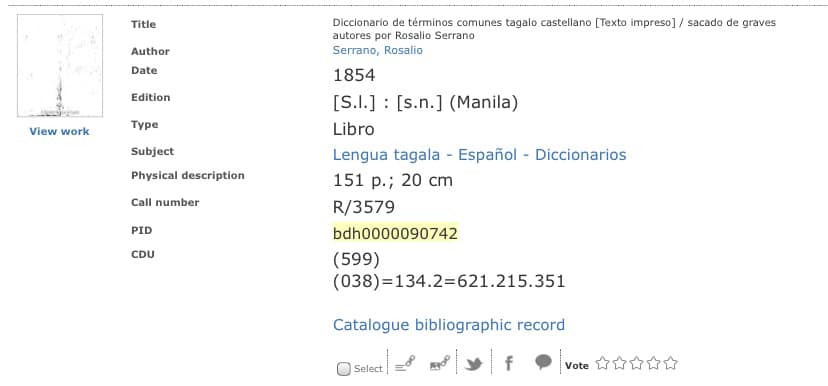
He found this interesting entry on Rosalio Serrano’s Diccionario de Términos Comunes Tagalo-Castellano, published in 1854: “Ondás. Honras. – Ipag-ondás mo ang iyong ama. Has honras por tu padre.

So Undas comes from the Spanish verb honrar, which means to honor, as in to honor the dead. It is conjugated in the second person, present tense, as honras.


Then he found another entry, this time from the Diccionario Hispano-Tagalog by Pedro Serrano y Laktaw (Rosalio Serrano’s son), published in 1889: “HONRA… pl. Misang patay.

The plural form of the noun Honra, which is Honras, specifically refers to the Mass for the Dead, which could mean either the Funeral Mass or the Mass celebrated on All Souls Day. In Spanish, funeral rites is translated as honras funebres, and funeral honors, honras funerales.


Does this mean that the mystery has been solved? If so, Undas originally refers to the Mass for the Dead on All Souls Day. Over time it has come to mean the feast of All Souls Day itself, and then later the twin feasts on November 1 (Dia de Todos los Santos) and 2 (Dia de los Muertos).


01 January 2015

A Tale of Two Feasts


Homily for the Solemnity of Mary Mother of God
1 January, New Year's Day


There are actually two feasts that we celebrate today: one is secular – New Year’s Day, and the other, sacred – the Solemnity of Mary Mother of God. As our thoughts and wishes turn towards better prospects for the new year, the liturgy turns our prayer and reflection towards the humble figure of the young mother Mary.

Media organizations usher in the new year with a recap of the previous year’s big events and predictions for the new one. Individuals write resolutions to start doing better things and stop doing bad ones. For most people there is more to January 1 than just being a human construct that tracks the passing of time. It is by most accounts a milestone, the start of yet another period laden with possibilities – of reforms to undertake, giants to slay, and life-altering decisions to make. And then the Church wants us to start the year with Mary.

Far from being yet another face-off in the culture wars between the sacred and the secular, the melding of these two feasts may actually be providential, a "happy concurrence" according to Pope Paul VI in his exhortation Marialis Cultus in 1974. This particular Marian feast springs from the affirmation that Jesus Christ is both true God and true man. Thus, it is only logical that Mary be called Theotokos (literally “God bearer”) in Greek, and Dei genetrix (“she who gave birth to God”) in Latin. In her womb, the mystery of the Incarnation first happened – God intervening in human affairs in the most dumbfounding way: by becoming one like us in all things but sin. The Incarnation is the ultimate melding of the sacred and the secular.

As we sit down for our annual ritual of making plans and writing down resolutions, we remember that God Himself set-out to accomplish a big plan which sought no less than the salvation of humanity. To accomplish such an enormous undertaking, His preparation spanned centuries and enlisted the help of prophets and priests, judges and kings. But at the final hour when everything was about to be brought to completion, He turned not to the high and mighty of the time but to a young girl in an obscure village in the outskirts of a sprawling empire, and made her decision to accept His offer a turning point in world history.

It was not at all far-fetched that the Chosen People would expect a Messiah who would come with political savvy and military might, conquering their known enemies and restoring their exalted place among the nations. After all they have been taught for generations that their savior would descend from the proud lineage of King David. Yet in choosing to save the world, God did not choose the way of the wise, the rich, and the mighty. Instead, He chose poor and simple folks to bear His Son, the most squalid condition for His birthplace, and one of the most dangerous times for His birth date.

This lesson is also found in the best modern-day allegory of the Good News. I am referring to the Lord of the Rings novels by J.R.R. Tolkien, including the recently concluded film trilogy, the Hobbit. Among the major characters in the series were the wizards Gandalf the Grey and Saruman the White. 

Wizards in Tolkien’s novels were not really humans who know how to conjure magic tricks, they were more like angels sent to set things right for the inhabitants of Middle-Earth and to protect them from evil. Both of them started with wanting to protect Middle-Earth from the evil Sauron but they differed in their ways. Saruman wanted to use whatever force there is, including the very tools of the enemy, to fight against evil. Gandalf, on the other hand, believed less in confronting brute force with brute force, and more in building peoples’ capacity for goodness, even among those perceived to be the weakest among them.

Along the way, Saruman would be corrupted by power, co-opted by Sauron, and eventually destroyed. Gandalf followed a more tortuous yet victorious route, rallying the forces of good amidst their respective self-doubts and petty concerns into great feats of heroism and self-sacrifice. In the end, the combined forces of men, elves, and dwarves won not because they have the bigger army or the more fearsome soldiers but because of the self-giving and determination of two simple hobbits: Frodo and Sam.

In one memorable line from the Hobbit movie, Gandalf said: “Some believe it is only great power that can hold evil in check, but that is not what I have found.  It is the small everyday deeds of ordinary folk that keep the darkness at bay.  Small acts of kindness and love.”

And so today, the first day of the year, we turn our thoughts towards Mary and remember how simple acts of kindness and love can be transformed by God into events that change the face of the earth. Our poverty and limit experiences were never meant to stop us from succeeding in life or, more importantly, from spreading goodness, mercy and compassion. Rather, as the Gospel story and our own life stories would attest, God sometimes makes use of our poverty and limit experiences as enablers to growth in wisdom and grace.  

This bit of sacred insight is meant to kickstart our secular year so that we can let God turn our human affairs – from the loftiest to the most mundane – into rays of light that dispel the darkness in our lives and in those of the people we meet.

May the inspiration of the Blessed Mary Mother of God lead us to living a blessed new year and building a brighter future for all.


20 January 2013

And a Little Child shall Guide Them


HOMILY
Solemnity of the Santo Niño (C) – 20 January 2013

Readings: Is 9:1-6; Ps 97: 1, 2-3, 3-4, 5-6; Eph 1:3-6, 15-18; Lk 2:41-52


On the third Sunday of January we get to have a set of readings and prayers different from the rest of the Universal Church. Today the Philippine Church celebrates the Solemnity of Señor Santo Niño. Pit Señor!

The prophet Isaiah prophesies in Is 11,6: "and a little child shall guide them." The feast is symbolic of the founding of the faith in our country. The image being venerated is originally the gift of Portuguese explorer Ferdinand Magellan (sailing under Spain) to Hara Amihan, wife of Rajah Humabon of Cebu, in 1521 on the occasion of the couples' baptism as Christians. Many of their constituents were baptized with them.

After Magellan was killed in Mactan, the Spanish presence was not felt until 1565 when Miguel Lopez de Legazpi came and defeated Rajah Tupas, ruler of Cebu and nephew of Rajah Humabon. When the battle was over, the image of the Santo Niño was found by a Spanish soldier, relatively unscathed in a burnt-out hut.

Today, the center of this national fiesta is still Cebu, though there are major cities and local churches who celebrate this feast around the same time as well.

What is the significance of celebrating the feast of the Infant Jesus?

1. It is a celebration of the God who is with us and became one of us.

The mood is fittingly expressed in how the Sto. Niño is garbed in many different ways: in traditional robes, contemporary toddler clothes, police uniform, soldier’s uniform, basketball jersey (Barangay Ginebra!), etc. The costumes may be too much for some, but they do deliver the message: Jesus is one of us.

This is the mystery of the incarnation expressed in popular imagination. Jesus went through childhood like the rest of us. And surely suffered fools gladly like not many of us.

There is though an unhealthy tendency in the devotion that runs counter to the very idea of celebrating Christ’s incarnation. There are those who put the image of the Santo Niño in stores and homes mainly for the purpose of bringing in luck. When devotion turns into this, we degrade Christ and turn him into an idol, a lucky charm. We rank Him alongside the “laughing Buddha”, the jade frog with the coin in its mouth, and the golden cat with its perpetually waving right arm. This is not true devotion, this is idolatry and sacrilege.

As an aside, the image of the Santo Niño was recovered in a burnt hut, along with other wooden idols. The image was quickly put in a proper place of honor. Later a church was built on the site where it was found. Since then festivals around the country honoring the Santo Niño were celebrated to commemorate the rediscovery of the image and the reestablishment of the true faith.

2. It is a celebration of the God who invites us to grow with Him and in Him.

Lk 2,52 (in the Gospel this Sunday) says: “And Jesus advanced in wisdom and age and favor before God and man.” Of course, the child Jesus grew into adulthood. Last Sunday, we celebrated the Solemnity of His Baptism. He was baptized when he was around 30 years old.

We too are called to mature in faith. The image of the Christ Child, given as a gift to the newly baptized Hara Amihan, renamed Juana, is symbolic as well of the infant faith of our people. How have we grown as a Christian people since then?

Let us take time to identify certain cultural traits that stunt our growth in the faith:

a. Nominal Catholicism. A great number of our people are Catholics in name only. However, not much attention is given to formation in the faith after baptism.

b. Folk Catholicism. Even now, non-Christian beliefs on the supernatural get mixed with the true faith. However, a contemporary – and more insidious – updating of this tendency is the corrupting influence of New Age beliefs and practices.

c. Cafeteria (or should we say in our case, turo-turo) Catholicism. There are also many who prefer to choose which doctrine or moral teaching to believe and live by, which bible quote suit their mood for the day. Those that they find difficult or do not conform to their way of life are discarded in favor of more “convenient ways” of being Catholic, or so they think.

d. Split-level Christianity. The tendency to compartmentalize worship and practice, devotion and morals, in my opinion, is the biggest obstacle to our maturing in faith.

As a child naturally grows to maturity, so God too constantly invites us to grow from our simple faith as a child to a faith that seeks favors to get by the realities of life, then to a faith that puts complete trust in His love, and finally to a faith that is ready to offer oneself and everything one owns in doing God’s will, in imitation of Christ who is one with the Father.

3. It is a celebration of the God who identifies with the little ones.

I remember a story told by a parish priest during Christmas in 2006, right after typhoon Reming devastated Albay. He said he was walking along his parish patio when two brothers, both of grade school age, approached him. He could see they were arguing in hushed tones as to who should talk with him. He thought they would be inquiring whether there are still any relief goods left. The older one finally came up to him and said they would like to make a donation. Then he promptly produced a small plastic bag filled with coins. It was their savings the whole year. He said their parents told them to save so they could buy gifts for Christmas. Lately their parents also told them about the many people who were affected by the typhoon. So they decided to help in their own way.

The Santo Niño embodies the best traits of children: their goodness, trust and humility, their capacity and thirst for learning, their potential for greatness. The Christ Child leads us to rediscover our childlike trust in God, our faith in the goodness of humanity and in our capacity to change for the better.

The Santo Niño also reminds us to be kind to the little ones, and to come to their defense when needed. The little ones are not only the children. They are the last, the least and the lost. Mt 25,40 says: “Amen, I say to you, whatever you did for one of these least brothers of mine, you did for me.”


10 December 2010

A Very Glee Christmas without Christ


This is the second time I commented on what has become one of the most popular TV shows in recent years: Glee. The first time I commented it was about the show getting a Catholics in Media Award for promoting Catholic values. It's not that I don't like the show. In fact, I have watched all its episodes. I have become a Gleek myself on the very first episode of season 1.

I recognize the positive and overwhelming influence the show has on people all over the world. That's why I find it important to speak up when it appears to misprepresent the faith that is part of the popular culture that provides its setting, inspiration and audience.

18 October 2010

God is a Vending Machine

God is not like a vending machine, 
promptly dispensing blessings 
as soon as we asked for them, 
in the way we expect them to be. 
That is, unless if vending machines were all like these one.

God's blessings may not always come 
the way we expect them to be, 
rather they are more like surprises 
from a loved one who knows more about us 
than we know ourselves.